Minerals / Field note
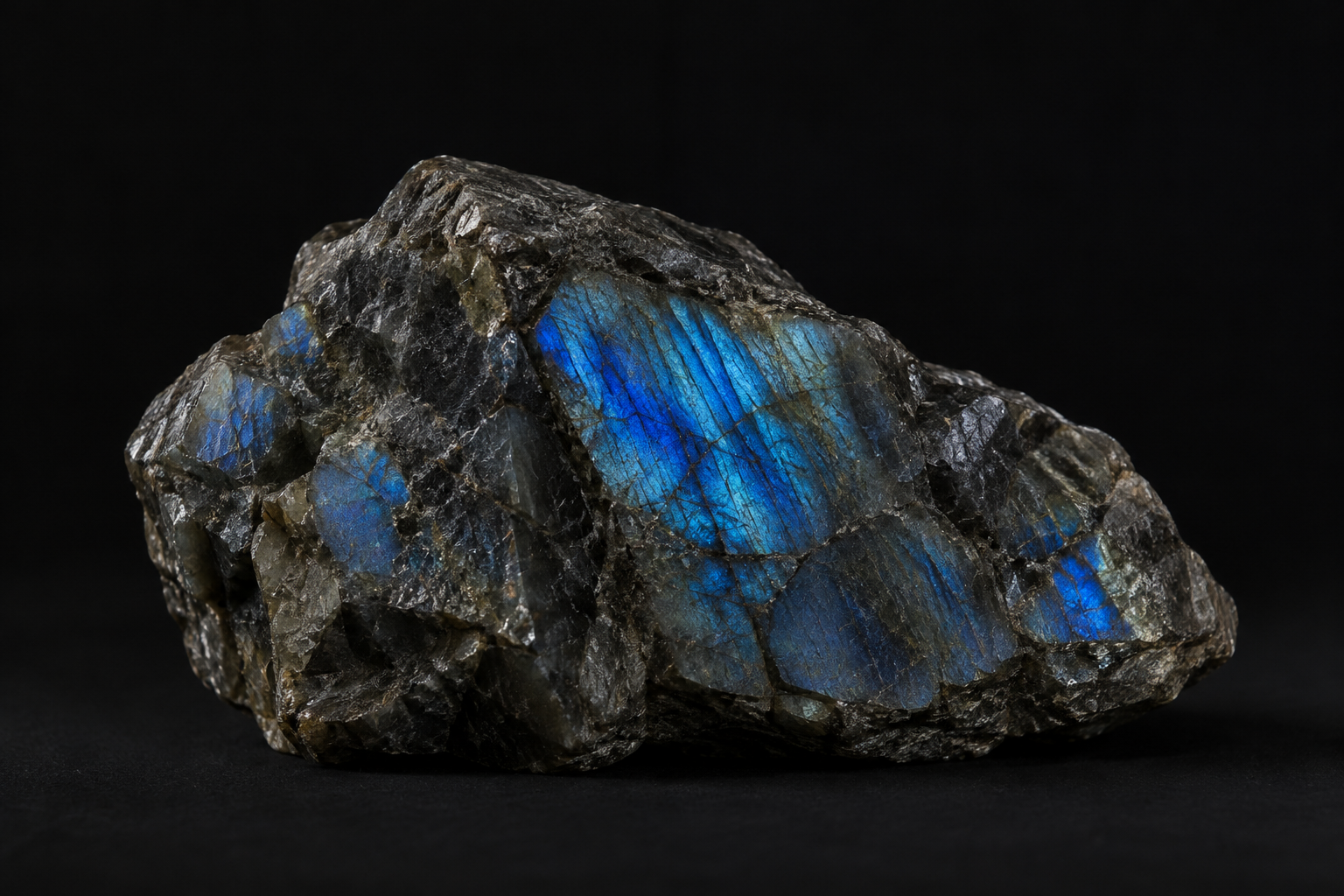
Why does labradorite flash blue?
Look at the same stone from a different angle, and its colour can change.
Labradorite’s flash is called labradorescence. Its internal structure includes alternating, microscopic feldspar layers with different compositions. Light interacting with these layers produces the optical effect; layer thickness and optical properties help determine the colour observed.
This is why the angle matters. A blue flash is not simply a blue patch painted into the material. Move the stone or the light, and the interaction changes. What looks like a quiet grey surface can suddenly become luminous.
Look slowly
Rotate a specimen under one light source. Notice where colour appears, how sharply it changes, and how the body of the stone differs from the flash. This is an observation exercise, not a test of authenticity.